
What to Do After Water Damage: Your First Hour
Stop the water, make it safe, document the loss and start drying. A plain checklist for the first hour.
Need water help right now?
Call with the source and the rooms affected.
Call for emergency water extractionWhat to do after water damage, in order
What to do after water damage: stop the source, cut power to wet rooms if you can do it from a dry spot, get people and pets clear, photograph everything, move valuables up and out, then call for extraction. Water left for 24 to 48 hours starts ruining drywall, pad and wood, and mold can follow.
The first hour decides most of the bill. Clean water caught early can usually be extracted and dried in place. The same water left overnight wicks up walls, soaks the pad under carpet and spreads under baseboards and cabinets.
This checklist is written for the slab homes common in DeSoto and nearby cities, where water spreads sideways across the floor rather than draining into a basement.
Key points
- Stop the water at the fixture valve or the main shut off first.
- Never walk into standing water near outlets, cords or appliances that are plugged in.
- Photos and video before cleanup protect your insurance claim.
- Start extraction the same day. Drying gets harder every hour.
Step 1: Stop the water
If the leak is at a toilet, sink, washer or water heater, close the small valve on the supply line behind or under it. If you cannot find it, or a pipe has split in a wall or ceiling, close the main shut off for the house.
Most North Texas slab homes have a house valve where the line enters near the foundation or garage, plus a city valve inside the meter box near the street. Our guide on finding your main water shut off valve shows where to look.
Step 2: Make the rooms safe
Water and electricity are the real danger. If water is near outlets, power strips or appliances, switch off those circuits at the breaker panel, but only if the panel is in a dry area and you are standing on dry ground. If not, stay out and tell the crew when you call.
Look up before you walk in. A ceiling that sags or bulges is holding water and can come down. Keep children and pets away from dirty water from drains, toilets or storm runoff.
Step 3: Document everything
Before you move or throw anything away, take wide photos of each room, close photos of the water line on walls and damaged items, and a short video walking through the house. Photograph the source too, such as the burst line or failed water heater.
Keep damaged items if you can, or at least photograph them with a tape measure for scale. Write down when you found the water and what you did. Insurers expect you to take reasonable steps to limit damage, and this record shows you did.
Step 4: Protect what you can
- Lift furniture legs onto foil, plastic lids or wood blocks to stop staining.
- Move rugs, electronics, papers and photos to a dry room.
- Pin up curtains and furniture skirts off wet floors.
- Open interior doors and run the AC to start pulling moisture from the air.
Do not use a household vacuum on water, and do not run fans on sewage or storm water, which can spread contaminants.
Step 5: Call for extraction
Tell the dispatcher four things: the source of the water, how many rooms are wet, what the floors are (carpet, tile, laminate, wood) and whether the water is clean or dirty. That decides the crew size and equipment.
On arrival, a crew should measure moisture, extract standing water with truck or portable extractors, remove anything that cannot be saved and set air movers and dehumidifiers. See structural drying for what happens over the next few days.
What not to do after water damage
- Do not wait to see if it dries on its own. Carpet pad and drywall hold water for days.
- Do not tear out walls or flooring before photos and an adjuster or crew has seen the damage.
- Do not use heaters to dry a house quickly. Heat without dehumidification can warp wood and spread moisture.
- Do not paint over or patch water stains until moisture readings say the material is dry.
Written for homeowners and renters in DeSoto, TX and nearby cities. This guide is general information, not legal, insurance or engineering advice. See our editorial policy for how guides are researched and reviewed.
Questions about the first hour after water damage
Should I call my insurance company or a water extraction crew first?
Stop the water and make the home safe first, then call for extraction. You can call your insurer the same day. Most policies expect you to act quickly to limit damage, and waiting for an adjuster before drying starts usually makes the loss worse.
Can I stay in the house after water damage?
Usually yes for a clean water leak limited to a few rooms. Leave if power cannot be shut off safely, if the ceiling is sagging, or if sewage or flood water has spread through living areas.
How soon does mold grow after water damage?
The U.S. EPA advises drying wet materials within 24 to 48 hours to prevent mold growth. Warm, humid Texas conditions make that window matter even more.
Is it safe to touch the water?
Clean water from a supply line is low risk once power is off. Water from toilets, drains, washers or outside flooding can carry bacteria. Wear gloves and boots and wash well afterward.
What should I tell the person who answers the call?
Your address, the source, how many rooms are wet, the type of flooring and whether the water is clean or dirty. Mention anyone in the home with health concerns.
More water damage guides
How Fast Should Standing Water Be Removed
What happens hour by hour and why the 24 to 48 hour window matters.
Read the guide →Shop Vac vs Professional Water Extraction
When a wet vac is enough and when it leaves water in the pad and walls.
Read the guide →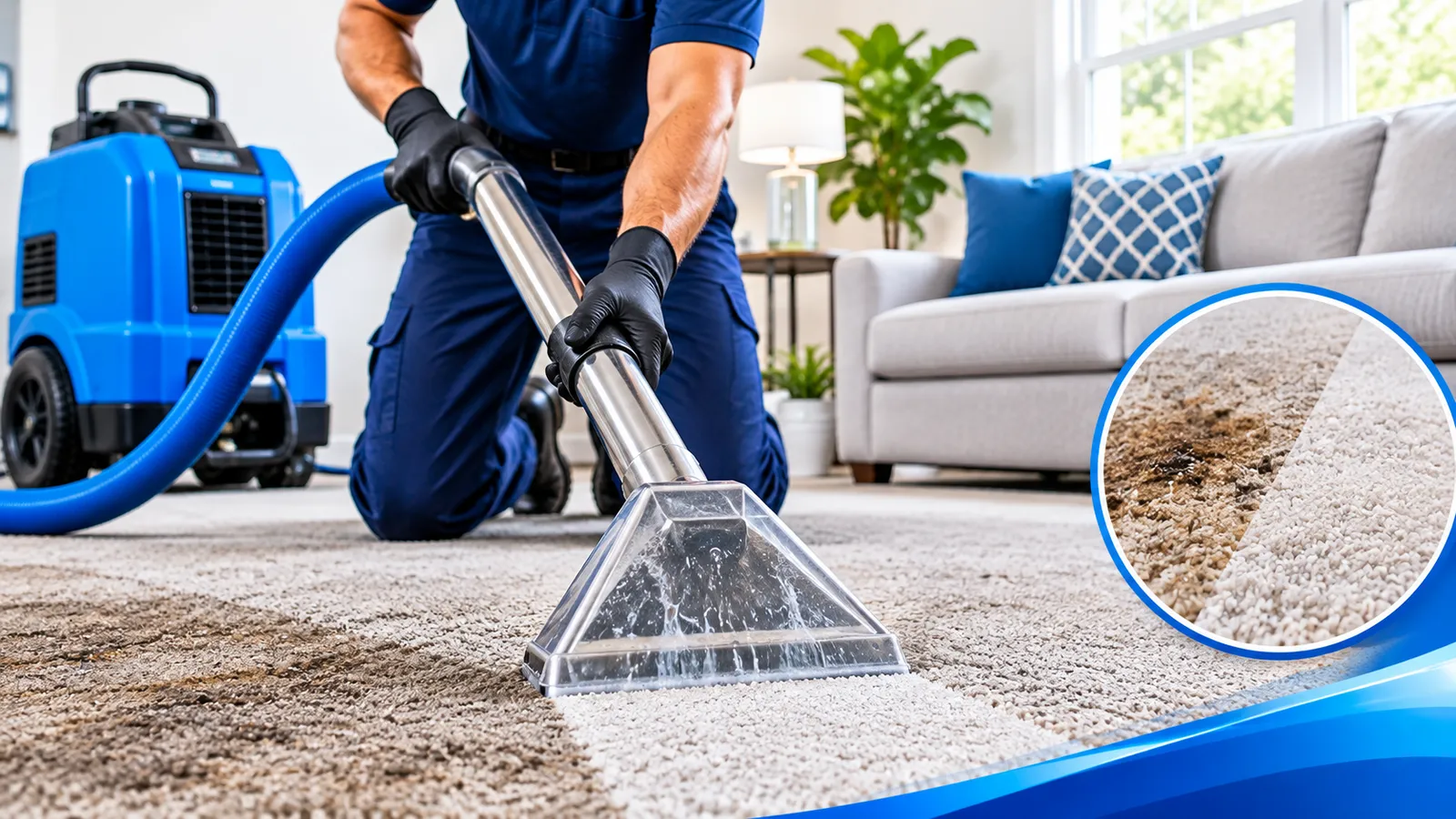
Can Wet Carpet Be Saved
Water category, timing and the pad decide whether carpet stays or goes.
Read the guide →Water spreading right now?
Stop the source, then call. Extraction that starts in the first hour saves the most.