
How Fast Should Standing Water Be Removed
Hour by hour, here is what standing water does to a home, and why the same day matters so much.
Need water help right now?
Call with the source and the rooms affected.
Call for emergency water extractionHow fast should standing water be removed from a house?
Standing water should be removed within the first few hours, and wet materials should be dry within 24 to 48 hours. That is the window the U.S. EPA gives for preventing mold growth. After that, clean water starts to break down drywall, swell wood and degrade toward gray water.
Speed matters because water does not sit still. On a slab floor it spreads under baseboards, into wall cavities and under cabinets. Carpet pad soaks it up like a sponge, and drywall wicks it upward a little more every hour.
The timeline below shows what typically happens to a home with a clean water leak. Dirty water from drains, toilets or storms starts at the bad end of this scale.
Key points
- First hour: water spreads and wicks; most materials can still be saved.
- Within 24 hours: drywall, pad and baseboards are soaking; odors start.
- 24 to 48 hours: mold can begin and clean water degrades toward gray water.
- Beyond 48 hours: more tear out, longer drying and higher cost.
What standing water does, hour by hour
| Time | What is happening | What it means for cleanup |
|---|---|---|
| Minutes to 1 hour | Water spreads across the floor and under baseboards. Pad and the bottom of drywall start absorbing. | Best chance to extract and dry everything in place. |
| 1 to 24 hours | Drywall wicks upward, particle board in cabinets swells, laminate edges lift, furniture stains carpet. | Some materials may need removal; drying takes longer. |
| 24 to 48 hours | Humidity climbs, musty odor appears, mold growth can begin, clean water picks up contaminants. | Pad often replaced; antimicrobial treatment more likely. |
| 2 to 7 days | Mold can spread, wood floors cup, drywall softens and crumbles. | Larger tear out and a longer, more expensive job. |
Why Texas homes have less time
Warm indoor temperatures and humid spring and summer air give mold what it needs. In DeSoto and the rest of North Texas, many homes are on concrete slabs, so there is no basement for water to drain into. It stays at floor level, where carpet, pad, baseboards and lower drywall sit.
Attic AC units and second floor laundry rooms also mean water often arrives through a ceiling, soaking insulation and drywall above you before you see the stain.
Clean water does not stay clean
Water from a burst supply line starts as Category 1, the cleanest kind. Once it sits on floors and in walls, it picks up dirt, finishes and bacteria. After a day or two it can be treated as Category 2, which changes what can be saved. Our guide to water categories explains the difference.
What you can do while you wait
- Stop the source and switch off power to wet rooms if it is safe.
- Mop or towel small areas of clean water on hard floors.
- Move furniture, rugs and boxes out of the wet area.
- Run the AC to lower humidity. Keep windows closed on humid days.
A shop vac can help with a small puddle, but it cannot pull water out of pad or wall cavities. See shop vac vs professional water extraction.
How quickly can a crew remove standing water?
Extraction itself is fast. A truck mounted or portable extractor can clear standing water from a typical room in well under an hour. The longer part is drying what soaked in, which usually takes three to five days for a clean water loss with air movers and dehumidifiers running.
Written for homeowners and renters in DeSoto, TX and nearby cities. This guide is general information, not legal, insurance or engineering advice. See our editorial policy for how guides are researched and reviewed.
Standing water timing questions
Is 24 hours too late to save my floors?
Not always. Tile and sealed concrete usually survive. Carpet can often be saved if the water was clean, though the pad may need replacing. Laminate and some wood floors may be past saving after a full day.
Can standing water damage the foundation?
A one time indoor leak rarely harms a slab. Repeated pooling outside the house, or a long running slab leak, can contribute to soil movement in North Texas clay. Fix drainage and leaks promptly.
Will mold definitely grow after 48 hours?
Not definitely, but the risk rises sharply. The EPA uses 24 to 48 hours as the drying target to prevent mold, which is why crews start drying the same day.
How long does it take to remove standing water?
Extraction of a single room usually takes less than an hour. Drying the materials afterward typically takes three to five days for clean water and longer for dense materials.
Should I open windows to dry the house?
Only when the air outside is drier than inside. On humid Texas days, open windows add moisture. Running the AC and dehumidifiers is usually better.
More water damage guides
Shop Vac vs Professional Water Extraction
When a wet vac is enough and when it leaves water in the pad and walls.
Read the guide →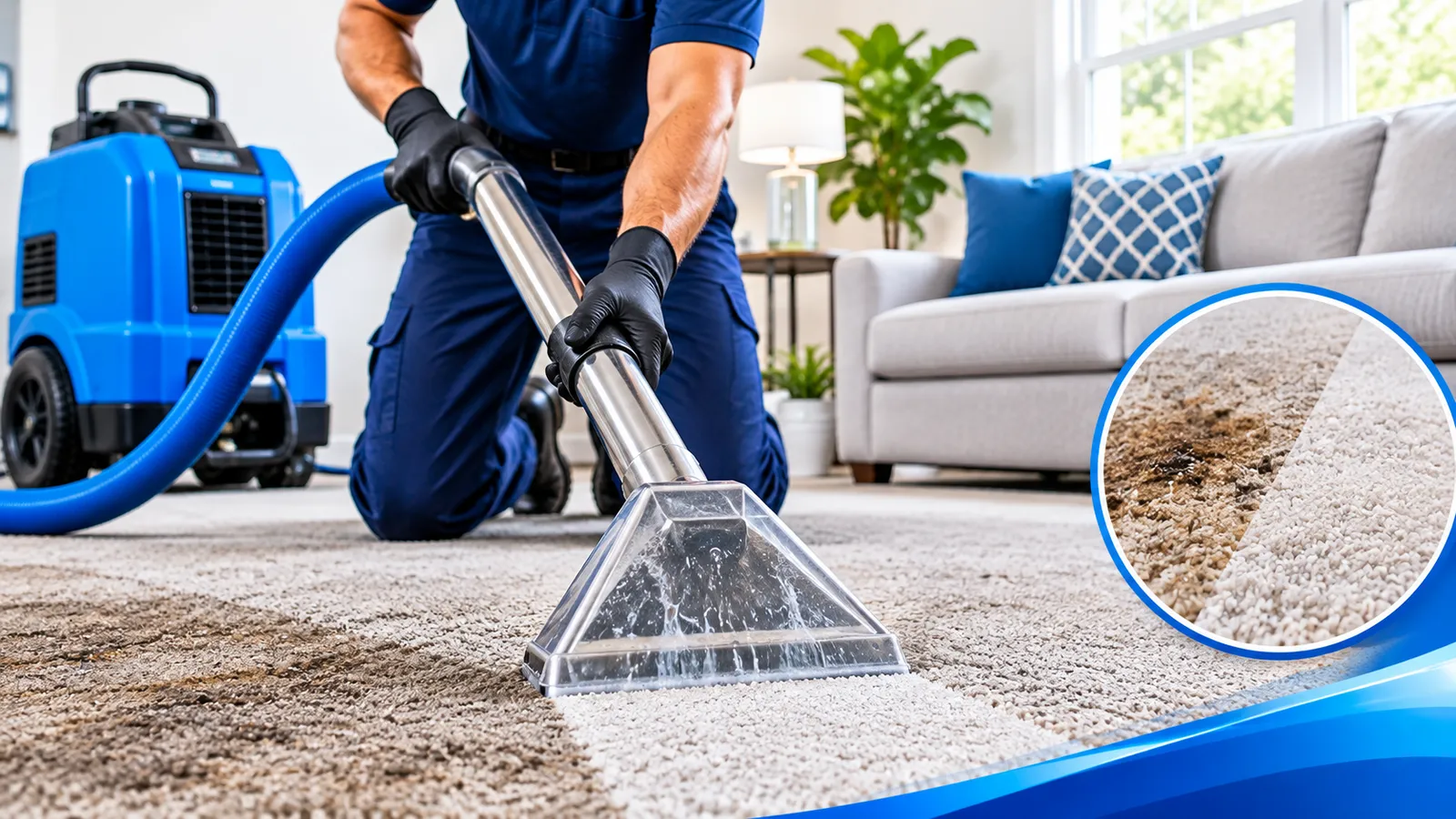
Can Wet Carpet Be Saved
Water category, timing and the pad decide whether carpet stays or goes.
Read the guide →Does Texas Homeowners Insurance Cover Water Damage
Sudden vs gradual leaks, flood exclusions and Texas claim deadlines.
Read the guide →Standing water in your home?
The first hours count. Call now and get extraction started today.