
Appliance Leak Water Extraction DeSoto TX
Washer hose burst or dishwasher overflowed? Water runs under cabinets and flooring fast.
Need water help right now?
Call with the source and the rooms affected.
Call for emergency water extractionAppliance leak water extraction DeSoto TX: from laundry rooms to kitchens
Appliance leak water extraction is the removal and drying of water from a washing machine, dishwasher, refrigerator ice maker or similar appliance. These leaks often start out of sight, behind or under the appliance, and spread under cabinets, laminate and carpet before anyone notices.
A burst washing machine hose is one of the most common sudden leaks in any home. It happens while the washer is filling, often when nobody is in the laundry room, and it keeps running until someone shuts the valve.
Dishwasher and ice maker leaks are the opposite: slow and quiet. By the time the floor buckles or the cabinet base swells, water has usually been feeding under the kitchen floor for days.
Appliance leaking now?
- Turn off the appliance and unplug it if you can reach the plug from a dry spot.
- Close its water valve: behind the washer, under the sink for the dishwasher, behind the fridge for the ice maker.
- Towel up water on hard floors to slow the spread.
- Pull the toe kick under the sink cabinet if water went underneath.
- Call if water reached carpet, cabinets or walls.
Which appliances leak most, and how?
| Appliance | Common failure | Water type |
|---|---|---|
| Washing machine | Burst fill hose, drain hose pops out, tub overflow | Clean (fill) or gray (drain) |
| Dishwasher | Door seal, supply line, drain connection under the sink | Gray |
| Refrigerator | Cracked plastic ice maker line, clogged defrost drain | Clean |
| Water heater | Rusted tank, relief valve, connections | Clean, see water heater leak cleanup |
| Water softener or filter | Housing crack, brine tank overflow | Clean |
Where does appliance water end up?
Laundry rooms in many DeSoto homes sit between the garage and the kitchen or a hallway, with carpet just past the door. Washer water spreads under the threshold into that carpet and along the bottom of the shared walls.
Kitchen leaks run under the cabinet toe kicks, where you cannot see them, and under laminate or wood floors toward the dining or living area. Refrigerator leaks often travel under the flooring to a wall on the other side of the kitchen.
How does appliance leak water extraction work?
- Map the moisture, including under the appliance, under cabinets and into neighboring rooms.
- Pull the appliance out and extract water from the floor behind it.
- Open the cabinet bases by removing toe kicks and, if needed, the cabinet floor.
- Extract carpet and pad in nearby rooms with weighted tools.
- Dry with air movers aimed under cabinets and dehumidifiers, logging readings each day.
Laminate over a slab usually has to come up to let the slab dry, because water trapped under the planks cannot evaporate. Solid hardwood may be saved with careful drying; see hardwood floor water extraction.
How do you prevent appliance leaks?
- Replace rubber washer hoses with braided steel
- Leave a few inches behind the washer so hoses do not kink
- Turn off the washer valves when traveling
- Check under the kitchen sink monthly for drips at the dishwasher connection
- Replace plastic ice maker lines with braided lines
- Put inexpensive leak sensors behind the washer, dishwasher and fridge
What affects the cost?
How long the leak ran, whether cabinets and laminate must come up, and whether the water was clean or gray. A burst hose caught in minutes is a small job. A dishwasher leak that ran for a week under the kitchen is not. See the cost guide.
Appliance leak questions
Should I replace rubber washing machine hoses?
Yes. Rubber fill hoses crack and burst with age, and a burst hose can release several gallons a minute until someone notices. Braided stainless steel hoses are inexpensive and far more durable. Many manufacturers suggest replacing hoses every few years.
Is water from a washing machine safe to clean up myself?
Water from the fill hose is clean. Water from the drain hose or an overflowing tub is gray water with detergent, lint and soil, so wear gloves. If it reached carpet or drywall, extraction and drying are usually needed.
Can kitchen cabinets be saved after a dishwasher leak?
Solid wood cabinets often can be dried in place. Particleboard and MDF bases swell and crumble when they stay wet, and usually need replacement. Removing the toe kick quickly and drying the cavity under the cabinets gives the best chance.
How do I stop a refrigerator ice maker line leak?
Find the shut off valve, usually under the kitchen sink or behind the refrigerator, and close it. Pull the fridge out carefully; the floor behind it may be soaked. Plastic ice maker lines are a common failure point.
Why is the floor buckling near my dishwasher?
A slow leak has been feeding water under the flooring. Laminate swells at the seams and hardwood cups. Moisture readings will show how far it spread under cabinets and into the next room.
Does insurance cover appliance leaks?
Sudden failures, such as a burst hose, are commonly covered. Long, slow leaks that caused rot or mold are often excluded as maintenance issues. The appliance repair itself is usually not covered.
Other water emergencies we handle around DeSoto
Water Heater Leak Cleanup
Failed tanks and relief valves cleaned up before water spreads.
Explore service →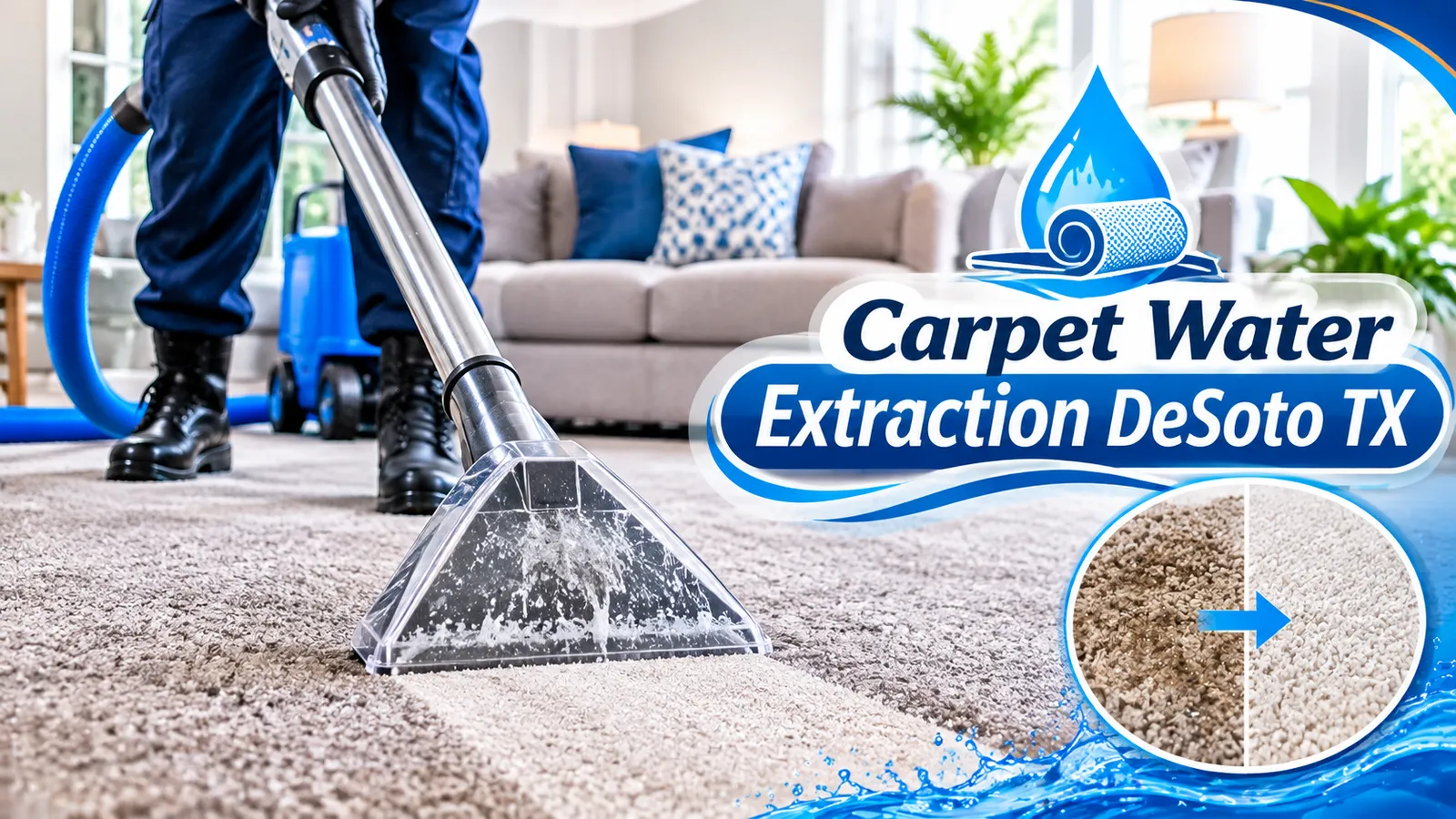
Carpet Water Extraction
Weighted extraction for soaked carpet and pad so the floor has a chance.
Explore service →Hardwood Floor Water Extraction
Wet wood floors extracted and dried slowly to limit cupping.
Explore service →Apartment Water Extraction
Unit and building leaks handled for renters, owners and managers.
Explore service →Structural Drying
Air movers, dehumidifiers and daily readings until walls and floors are dry.
Explore service →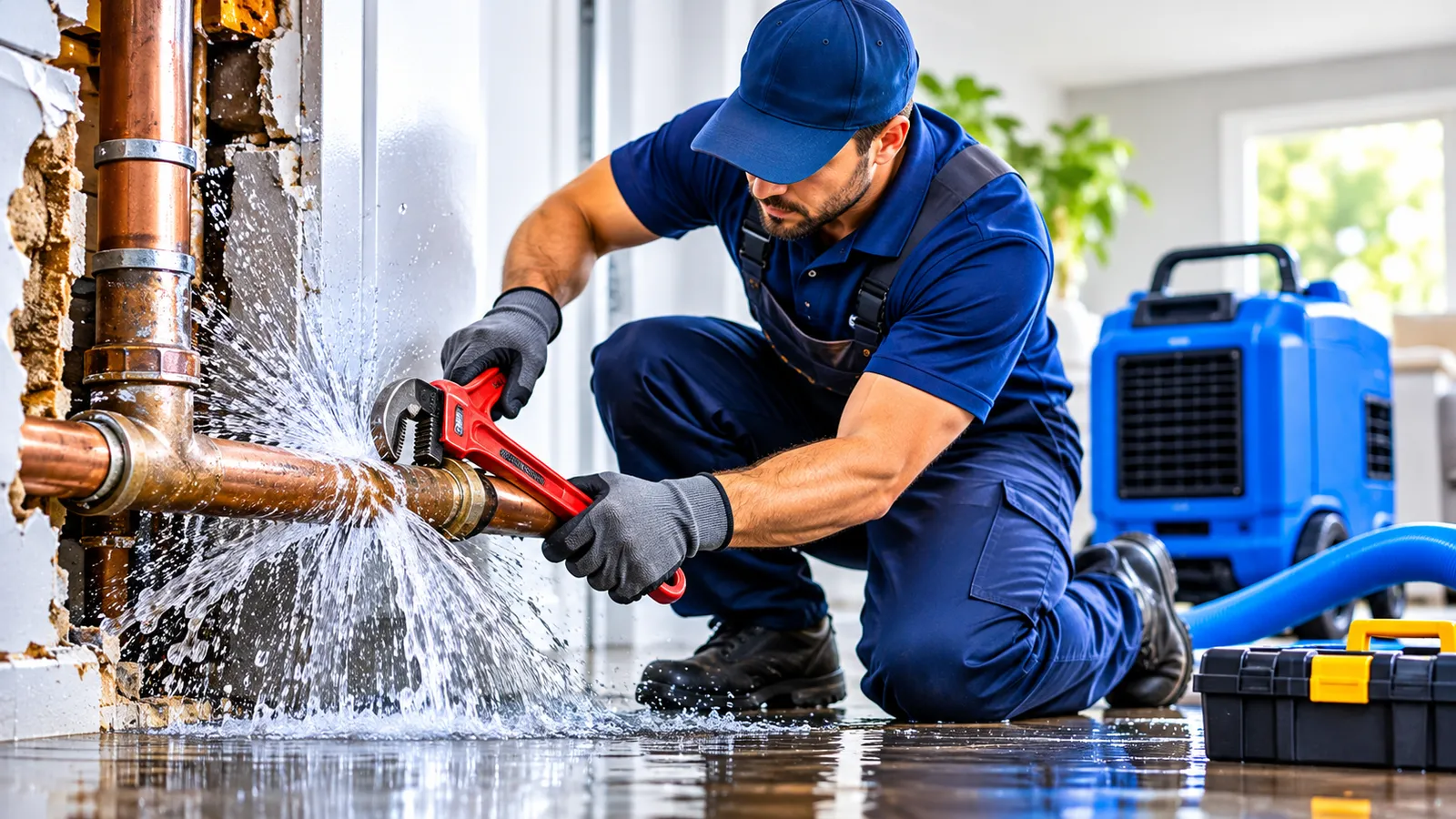
Burst Pipe Water Extraction
Split supply lines, failed fittings and freeze breaks extracted and dried.
Explore service →Water under the cabinets?
Hidden appliance leaks keep spreading. Call and get it dried out.